

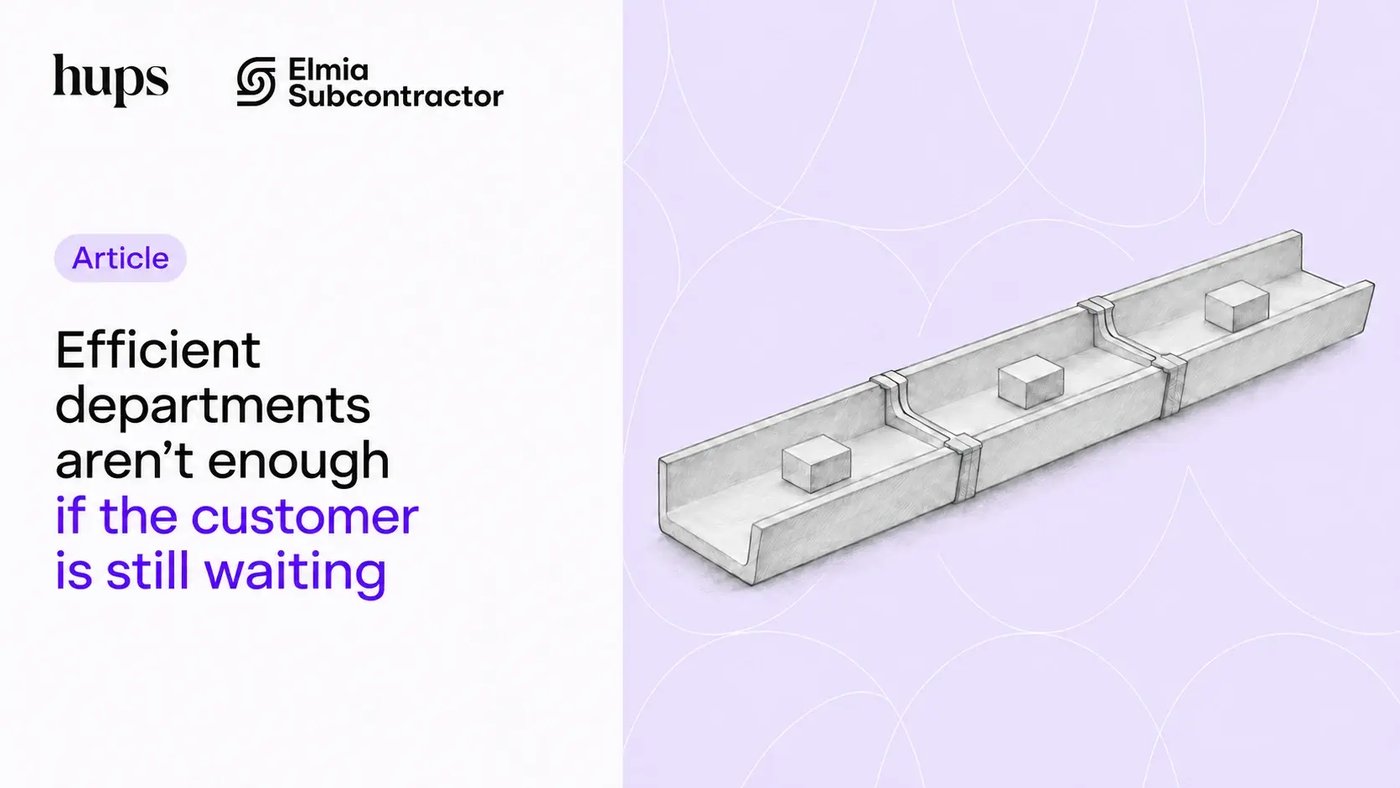
When this happens, looking at each department separately tells only part of the story. The more useful question is what happens to an order as it moves between them.
Elmia Subcontractor explores this challenge in a new article about Hups, published on 11 November 2026. It highlights our approach to improving flow and helping organisations develop the capability to keep improving themselves.
Follow an order, not just the department reports
Consider a manufacturer reviewing a delayed delivery. Each team may have completed its own tasks within the agreed time. But between those tasks, the order waited for clarification, approval or a place in the next team’s schedule.
No single department’s report necessarily explains that delay. To understand it, bring the people involved together and trace one order from the customer’s request to delivery.
Ask three questions:
- Where did the order wait, and what was it waiting for?
- Did the next team receive everything it needed to continue?
- Which change would shorten the customer’s total wait?
This gives teams a shared problem to solve, grounded in the same customer experience.
From the mine to the port: the LKAB example
Elmia’s article highlights our work with LKAB, which began in 2024 around the logistics flow from mine to port. It describes how managing and improving the whole flow helped LKAB increase the number of ore trains dispatched per day and address delivery problems.
The article also describes how LKAB’s own managers lead the work, supported by Hups programmes and platform. That ownership matters: the organisation needs the ability to continue improving as conditions change.
Give teams the means to act together
A useful next step is to choose one recurring delay and give the teams involved a shared improvement goal. Agree who will try the change, when they will review it and how they will know whether it helped the customer.
Keep the first experiment small enough to learn from. For example, teams could agree what information must accompany a handover, then check whether fewer orders need clarification.
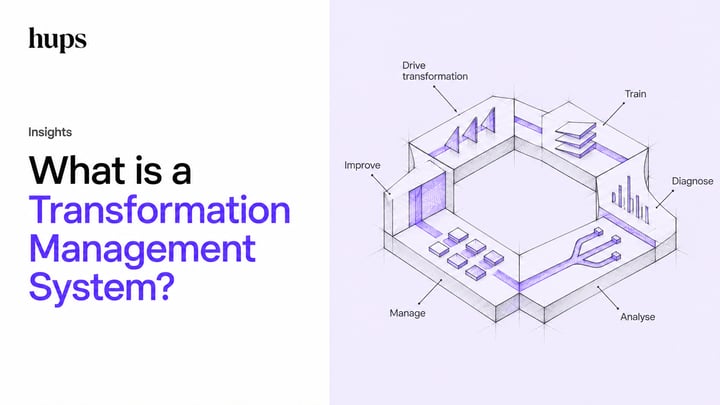
Our Transformation Management System supports this work by connecting training, diagnosis, management boards and improvement initiatives. Our training and expert services help leaders and teams build the capability to use these practices in their own operations.
At your next performance review, put a customer order alongside the department reports. If the reports look good but the delivery is late, investigate the waiting between the tasks.
Read Elmia Subcontractor’s original article, published on 11 November 2026: Effektivare flöden och starkare organisationer (in Swedish).