menu
close_24px

Flow Identification & Flow AnalysisCreate clarity, collaboration and true end-to-end performance

Flows connect functions, people and resources into one coherent whole. We help you build shared understanding, remove bottlenecks and create end-to-end performance focused on the customer.
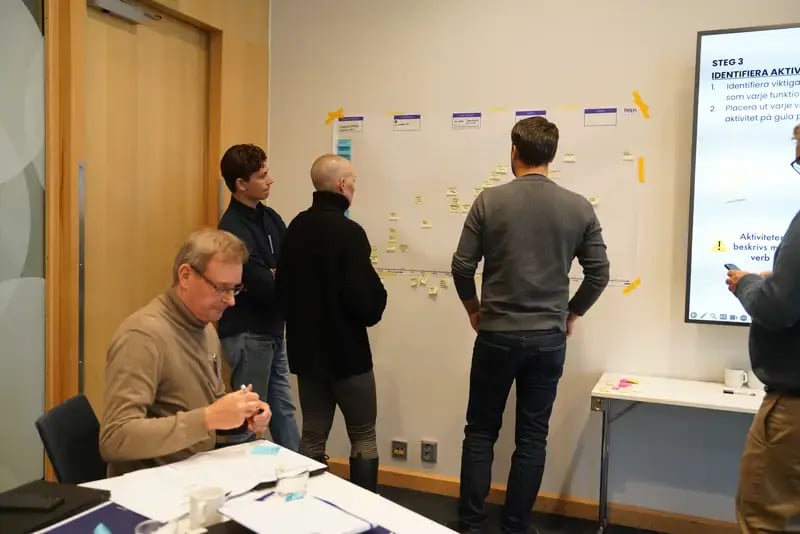
Workshop participants examining notes together on a wall

Flow Identification & Flow AnalysisCreate clarity, collaboration and true end-to-end performance

Flows connect functions, people and resources into one coherent whole. We help you build shared understanding, remove bottlenecks and create end-to-end performance focused on the customer.

Trusted across industries

From growing companies to large enterprises and public agencies, these organizations are building their own capability to improve flow.

LKAB logo
Roche logo
Cloetta logo
Bauer Media Outdoor logo
Volvo logo
Trafikverket logo
Scania logo
CJ Automotive logo
Airbus logo
UTSCH logo
Eramet logo
Pantamera logo
Apotekstjänst logo
Holmen logo
Mantena logo
Arla logo

From process to flow

Process documents describe the steps. Flows show how value is created.

Many organizations have extensive process documentation, often abstract, internally focused and owned by no one. These descriptions explain what we do step by step, but fail to reflect how value is actually created for customers. The result is documentation that lives in management systems rather than in daily work. It becomes difficult to see the whole, understand dependencies and work effectively across functions.

At Hups, we help organizations shift from process thinking to flow thinking by identifying, mapping and improving the flows that truly create value.

The challenge we address

Traditional process descriptions are often written from an inside-out perspective. They focus on functions rather than customers, and activities rather than outcomes. This makes it hard to understand:

  • How value flows through the organization
  • Where handovers break down
  • Why lead times are long and unpredictable
  • How different functions actually need to work together

Without a clear flow perspective, organizations struggle to operate as a coherent system.

What we help you achieve

We help you identify and analyze your end-to-end flows, from customer request to delivered product or service. This can include:

  • Primary flows: customer flows, product flows and service flows
  • Secondary flows: information, material, maintenance, competence, resource and support flows that enable the primary flows

By understanding how these flows interact, you gain a clear picture of how your organization truly works, and where it fails to work as a system.

The Hups approach

We build your capability to analyze flows yourselves

Hups has long experience studying how leading organizations design and manage flows. Over many years, we have developed a simple, visual and highly practical approach to flow analysis that enables both managers and employees to understand complex systems quickly.

Rather than conducting analyses for you, we build your capability to do them yourselves.

  1. Make flow visible

    A simple, visual and practical approach to flow analysis that helps managers and employees understand complex systems quickly.

  2. Build internal capability

    Through digital learning, clear frameworks and hands-on application, you learn to identify flow units, map flows end-to-end, visualize handovers, detect bottlenecks, understand root causes and define a desired future state.

  3. Scale flow analysis

    Flow analyses can be done analog or digital, and scale from a single problem flow to dozens or hundreds of flows across the organization.

Read about the Hups approach

What you get

What's included, and what changes when you see the whole flow

What's included

  • Identification of primary and secondary flows
  • Selection and prioritization of flows to analyze
  • Training in flow analysis principles and methods
  • Practical frameworks and visual templates for mapping
  • Hands-on flow mapping workshops
  • Identification of flow problems and root causes
  • Definition of desired future-state flows
  • Support via Hups technology for scalability and reuse

Outcomes & business impact

Organizations working with flow analysis typically achieve:

  • Clear visibility of how value actually flows end-to-end
  • Stronger cross-functional collaboration
  • Reduced silo thinking and better handovers
  • Shorter lead times and improved predictability
  • Clear improvement priorities grounded in real work
  • Flow maps that function as powerful management tools

Who this is for

Organizations that want to become more flow-oriented, whether by mapping all major flows or by focusing on a few critical problem flows. It is relevant for leadership teams, managers and cross-functional groups who want to improve performance by working together as one system.

In their words

Improvement that starts on day one and keeps going

Training alone does not create capability. Here is what leaders saw when their teams learned by improving real work.

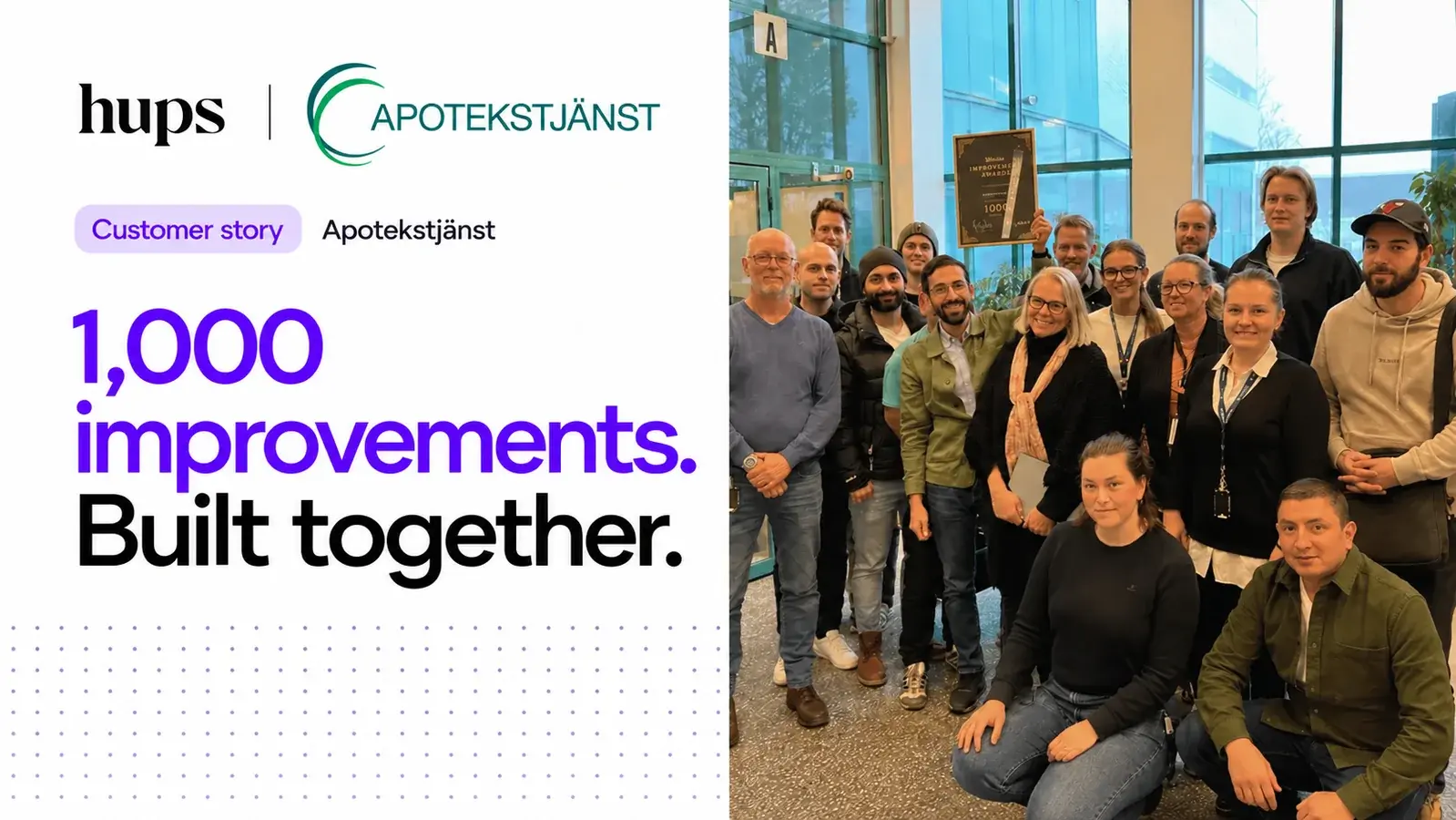
My management team identified and implemented 196 improvements within 6 weeks thanks to capabilities we learnt through the training programs.

Maitham Ridha
Maitham RidhaCEO, Apotekstjänst

FAQ

Questions about flow identification and flow analysis

Can't find what you're looking for? Talk to one of our experts.

Who is flow analysis for?

Organizations that want to become more flow-oriented, whether by mapping all major flows or by focusing on a few critical problem flows. It is relevant for leadership teams, managers and cross-functional groups who want to improve performance by working together as one system.

What is the difference between process thinking and flow thinking?

Process descriptions are often written from an inside-out perspective, focusing on functions rather than customers and activities rather than outcomes. Flow thinking follows how value actually moves through the organization, from customer request to delivered product or service.

Which flows do you analyze?

Primary flows, such as customer, product and service flows, and secondary flows, such as information, material, maintenance, competence, resource and support flows that enable the primary flows. Together we select and prioritize which flows to analyze.

Will Hups do the analysis for us?

Rather than conducting analyses for you, we build your capability to do them yourselves. You learn through digital learning, clear frameworks, visual templates and hands-on flow mapping workshops.

Can flow analysis scale across the organization?

Yes. Flow analyses can be done analog or digital, and can scale from a single problem flow to dozens or hundreds of flows. Hups technology supports scalability and reuse.

From silos to systems

Ready to see how value really flows through your organization?

Talk to us about how our flow analysis approach can help you build shared understanding, remove bottlenecks and create end-to-end performance focused on the customer.