
Implementing Daily ManagementCreate clarity, structure and sustainable productivity, every day
Daily management is not about control. It is about enabling people to succeed every day, with a system that delivers results quickly and sustains them over time.
Implementing Daily ManagementCreate clarity, structure and sustainable productivity, every day
Daily management is not about control. It is about enabling people to succeed every day, with a system that delivers results quickly and sustains them over time.
Trusted across industries
From growing companies to large enterprises and public agencies, these organizations are building their own capability to improve flow.















Why daily management
Productivity suffers when no one knows what a good day looks like
Many organizations struggle with productivity because they lack a clear way of managing daily performance. Leaders and teams do not know what a good day looks like. It is hard to tell whether today was better than yesterday, or this week better than last. Without daily goals, clear structures and shared routines, organizations lose direction.
We help organizations implement daily management as a core capability to systematically improve productivity, performance and engagement.
The challenge we address
Without daily management, organizations operate reactively. Problems surface too late, priorities shift constantly, and teams lack clarity on what success looks like. The result is unclear goals, limited visibility of performance, weak coordination across teams, poor follow-up on problems and deviations, and unstable results.
Productivity suffers not because people do not work hard, but because the system for managing daily work is missing.
What we help you achieve
We help you build a clear, structured and scalable daily management system across the organization. Every team defines what a good day, week and month looks like, and how to manage toward it.
Daily management is built around four core capabilities: performance management (clear goals and follow-up), flow management (managing what matters in your flows), resource management (the right conditions for a good day) and improvement management (systematic handling of problems and deviations).
The Hups approach
Daily management, built in manageable steps
Our approach breaks implementation into manageable steps.
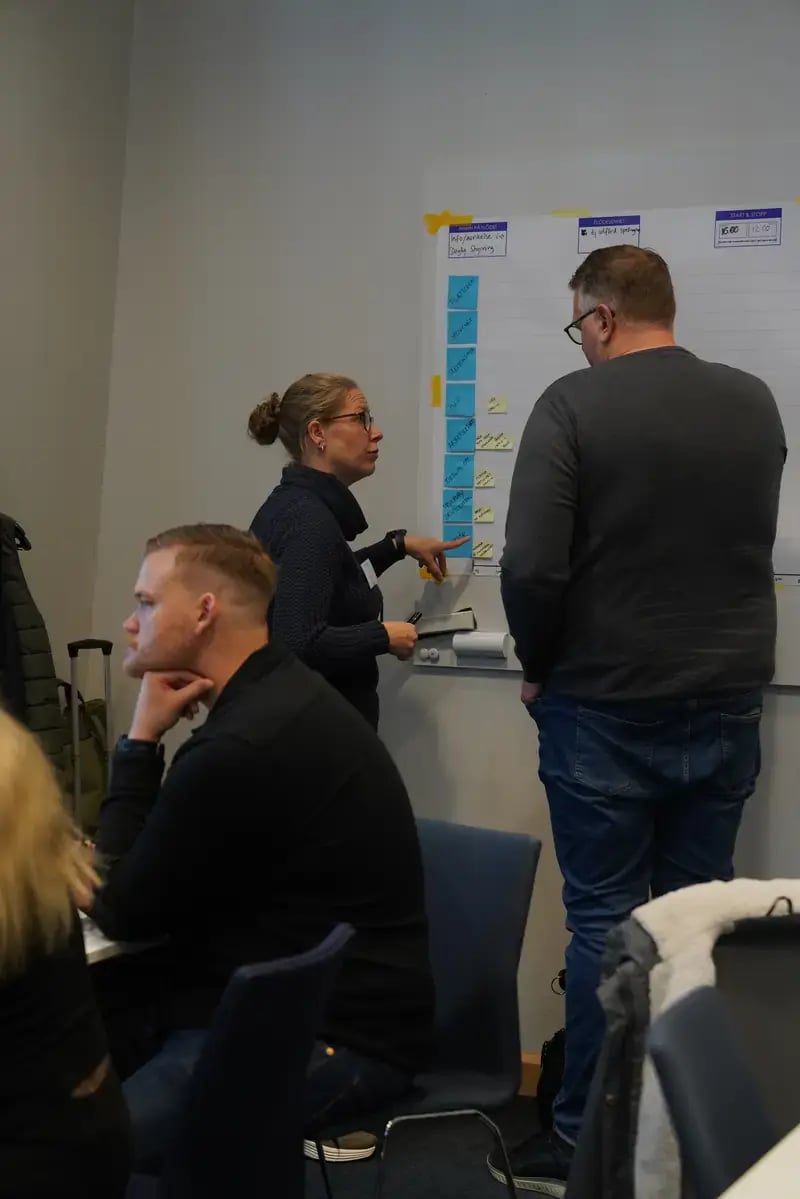
Visual management plays a key role. Teams visualize goals, flows, resources, routines, problems and improvements so everyone can see and act.
Create a digital twin
We structure the organization into teams, often aligned with the organizational structure, and create a digital twin of the organization.
Train & assess
Each team is trained in operational excellence and daily management, runs a self-assessment of strengths and improvement areas, and makes a concrete plan to develop the four capabilities step by step.
Implement in small steps
Implementation is incremental. We focus on small, practical changes that quickly create value and are easy to sustain.
What you get
What's included, and what changes in daily work
What's included
- Training in operational excellence and daily management
- Structuring teams and building a digital organizational twin
- Team-based self-assessments of current ways of working
- Development of performance, flow, resource and improvement management
- Visual management structures and standards
- Clear routines for daily, weekly and monthly follow-up
- Platform support for training, diagnostics, visualization and improvement work
Implementation can be fast or gradual, depending on ambition, scope and involvement.
Outcomes & business impact
Organizations implementing daily management with Hups typically achieve:
- Clearer structure and priorities in daily work
- Higher and more stable productivity
- Faster identification and resolution of problems
- Stronger employee engagement and ownership
- A more sustainable and healthy work environment
- Continuous improvement driven by the people doing the work
Who this is for
Organizations that want to involve everyone, from leadership teams to frontline employees. It works across industries, functions and roles, and can be implemented rapidly when leadership takes clear ownership.
In their words
Improvement that starts on day one and keeps going
Training alone does not create capability. Here is what leaders saw when their teams learned by improving real work.
My management team identified and implemented 196 improvements within 6 weeks thanks to capabilities we learnt through the training programs.
Our flow analyses have created a shared view and incredible engagement. Leadership has fully adopted the Hups approach, building momentum across the organization. I've never seen anything like it in my ten years in this industry.
The programs inspire ideas for improvement from day one. We have generated over 200 improvements so far and we're well equipped to continue.
I was impressed with the simplicity of the program and the connection with our reality. It is the best explanation about flow I have seen!
From the beginning of the Foundation program, we could already see new ways of working and of approaching our challenges.
Customer stories
What happens when teams own their daily work
Real results from organizations where teams set clear goals, followed up every day and improved their own work.

1 day → <2 h
Bauer Media Outdoor
How Bauer Media Outdoor cut quote time to under two hours
Creating a client quote often took more than a working day. The change did not come from people working faster. It came from improving the flow of work.
Read the story →

17 → 7 days
Auctionet
How Auctionet cut delivery time from 17 days to 7
Auctionet's COO and Logistics Manager explain what they changed to get items to buyers ten days sooner. Includes a 3-minute video.
Read the story →
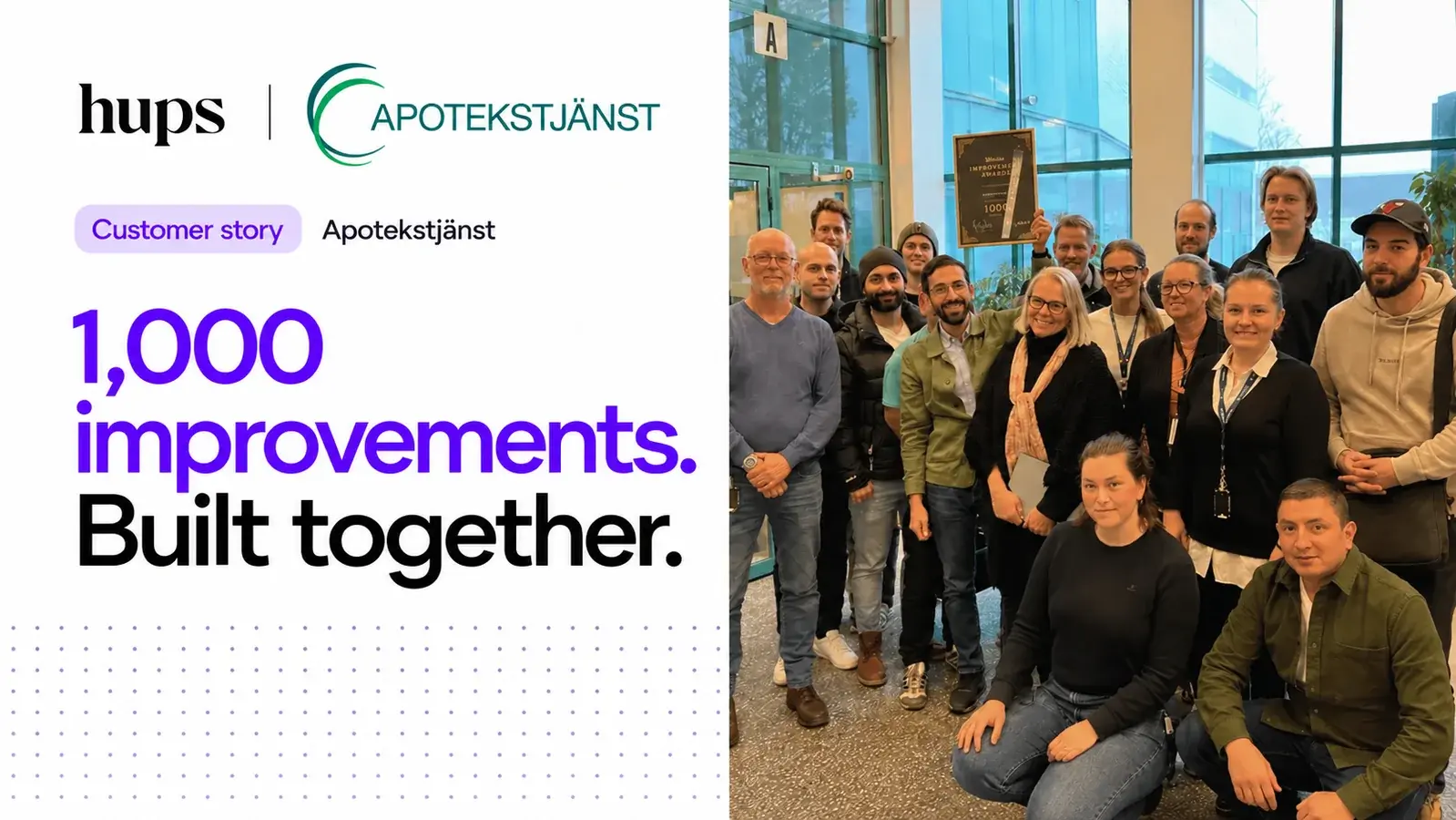
1,000 improvements
Apotekstjänst
Apotekstjänst: celebrating 1,000 improvements
Apotekstjänst passed 1,000 improvements, each one found and carried out by people inside the organization.
Read the story →FAQ

Questions about implementing daily management
Can't find what you're looking for? Talk to one of our experts.
What is daily management?
A structured way of managing daily performance. Every team defines what a good day, week and month looks like, and how to manage toward it, with clear goals, shared routines and follow-up.
Which capabilities does daily management build?
Four core capabilities: performance management (clear goals and follow-up), flow management (managing what matters in your flows), resource management (the right conditions for a good day) and improvement management (systematic handling of problems and deviations).
How is daily management implemented?
In manageable steps. We structure the organization into teams and create a digital twin, train and assess each team, and then implement in small, practical steps that quickly create value and are easy to sustain.
What role does visual management play?
A key one. Teams visualize goals, flows, resources, routines, problems and improvements so everyone can see and act.
How fast can daily management be implemented?
Implementation can be fast or gradual, depending on ambition, scope and involvement. It can be implemented rapidly when leadership takes clear ownership.
Related services
Build on daily management
Developing Continuous Improvement
Build a self-improving organization where continuous improvement is part of everyday work.
Learn more → TransformationManaging & Improving End-to-End Flows
Manage and improve end-to-end flows so value is created faster, more reliably and with clear customer focus.
Learn more → TransformationCompany-Wide Transformation
Management-led transformation where capability, ownership and execution are built into the organization itself.
Learn more → TrainingAll-Employee Training Programs
Build understanding and engagement across all employees, regardless of role, education level or industry.
Learn more →Productivity built from within
Ready to create clarity and productivity, every day?
Talk to us about how implementing daily management can help you create clarity, engagement and measurable productivity improvements.
