Managing & Improving End-to-End FlowsTransform silos into customer-focused, high-performing end-to-end flows
We do not analyze flows for you. We build your capability to continuously manage and improve them, so value reaches the customer faster and more reliably.
Managing & Improving End-to-End FlowsTransform silos into customer-focused, high-performing end-to-end flows
We do not analyze flows for you. We build your capability to continuously manage and improve them, so value reaches the customer faster and more reliably.
Trusted across industries
From growing companies to large enterprises and public agencies, these organizations are building their own capability to improve flow.






Why end-to-end flow
When every function optimizes its own part, the whole flow suffers
Many organizations are built around silos. Each function optimizes its own performance, priorities and resources, often with good intentions. Yet viewed end-to-end, the result is inefficient flows with long and unstable lead times, poor handovers, unnecessary waste and weak customer focus. The outcome is predictable: low delivery reliability, inconsistent quality, and value that reaches the customer too slowly and at too high a cost.
We help organizations manage and improve end-to-end flows so value is created faster, more reliably and with a clear customer focus.
The challenge we address
Silo-based organizations struggle to operate as one system. When no one owns the full flow, decisions are made locally, problems are escalated too late, and improvements optimize parts rather than the whole.
This leads to long and unstable lead times, poor quality and rework, inefficient handovers between functions, limited customer focus, and difficulty sustaining improvements over time.
What we help you achieve
We help you design and lead customer-focused end-to-end flows. That covers primary flows that deliver products and services to customers, and secondary flows that enable them, such as logistics, procurement, design, maintenance, recruitment or training.
The goal is clear ownership, effective cross-functional collaboration and the capability to continuously manage and improve flow performance.
The Hups approach
Four integrated phases, from flow team to stable flow
Our transformation approach is structured, proven and built on years of experience studying how leading organizations manage end-to-end flows.
The program consists of four integrated phases.
Mobilize the flow team
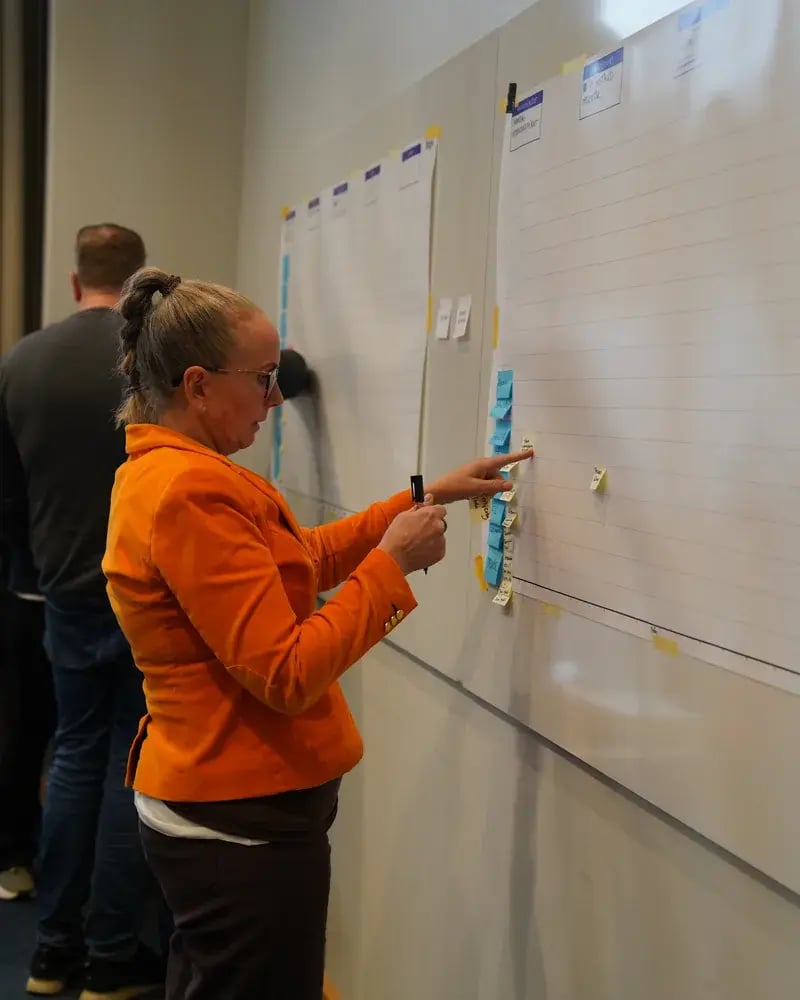
We establish a cross-functional team responsible for the entire flow and build a shared understanding of flow leadership through targeted digital training.
Diagnose and analyze the flow
We assess maturity, analyze the current state, identify flow blockers and understand the root causes that limit performance.
Establish flow governance
We design a cross-functional management structure built on four capabilities: performance, flow, resource and improvement management.
Improve and stabilize the flow
Using specialized improvement programs, the organization sets priorities and systematically improves what matters most: quality, lead time, stability, productivity or customer focus.
What you get
What's included, and what changes in your flows
What's included
- Foundational training in flow-oriented leadership and operations
- Flow assessments and in-depth flow analysis
- A clear flow governance and management structure
- Access to the Hups platform as a digital transformation workspace
- Support in defining a flow-specific transformation roadmap
- Coaching and guidance to ensure rapid and sustainable impact
Outcomes & business impact
Organizations working with Hups to manage and improve flows typically achieve:
- Shorter and more stable lead times
- Improved quality and delivery reliability
- Stronger cross-functional collaboration
- Clear ownership of end-to-end performance
- Faster realization of measurable business results
- Sustainable flow improvement capability
Who this is for
Organizations that want to move from silo optimization to system performance. It is relevant for both primary and secondary flows, and can be applied to one critical flow or scaled across many flows.
In their words
Improvement that starts on day one and keeps going
Training alone does not create capability. Here is what leaders saw when their teams learned by improving real work.
My management team identified and implemented 196 improvements within 6 weeks thanks to capabilities we learnt through the training programs.
Our flow analyses have created a shared view and incredible engagement. Leadership has fully adopted the Hups approach, building momentum across the organization. I've never seen anything like it in my ten years in this industry.
The programs inspire ideas for improvement from day one. We have generated over 200 improvements so far and we're well equipped to continue.
I was impressed with the simplicity of the program and the connection with our reality. It is the best explanation about flow I have seen!
From the beginning of the Foundation program, we could already see new ways of working and of approaching our challenges.
Customer stories
What happens when teams own the flow
Real results from organizations that improved how work flows, led by their own leaders and teams.

1 day → <2 h
Bauer Media Outdoor
How Bauer Media Outdoor cut quote time to under two hours
Creating a client quote often took more than a working day. The change did not come from people working faster. It came from improving the flow of work.
Read the story →

17 → 7 days
Auctionet
How Auctionet cut delivery time from 17 days to 7
Auctionet's COO and Logistics Manager explain what they changed to get items to buyers ten days sooner. Includes a 3-minute video.
Read the story →
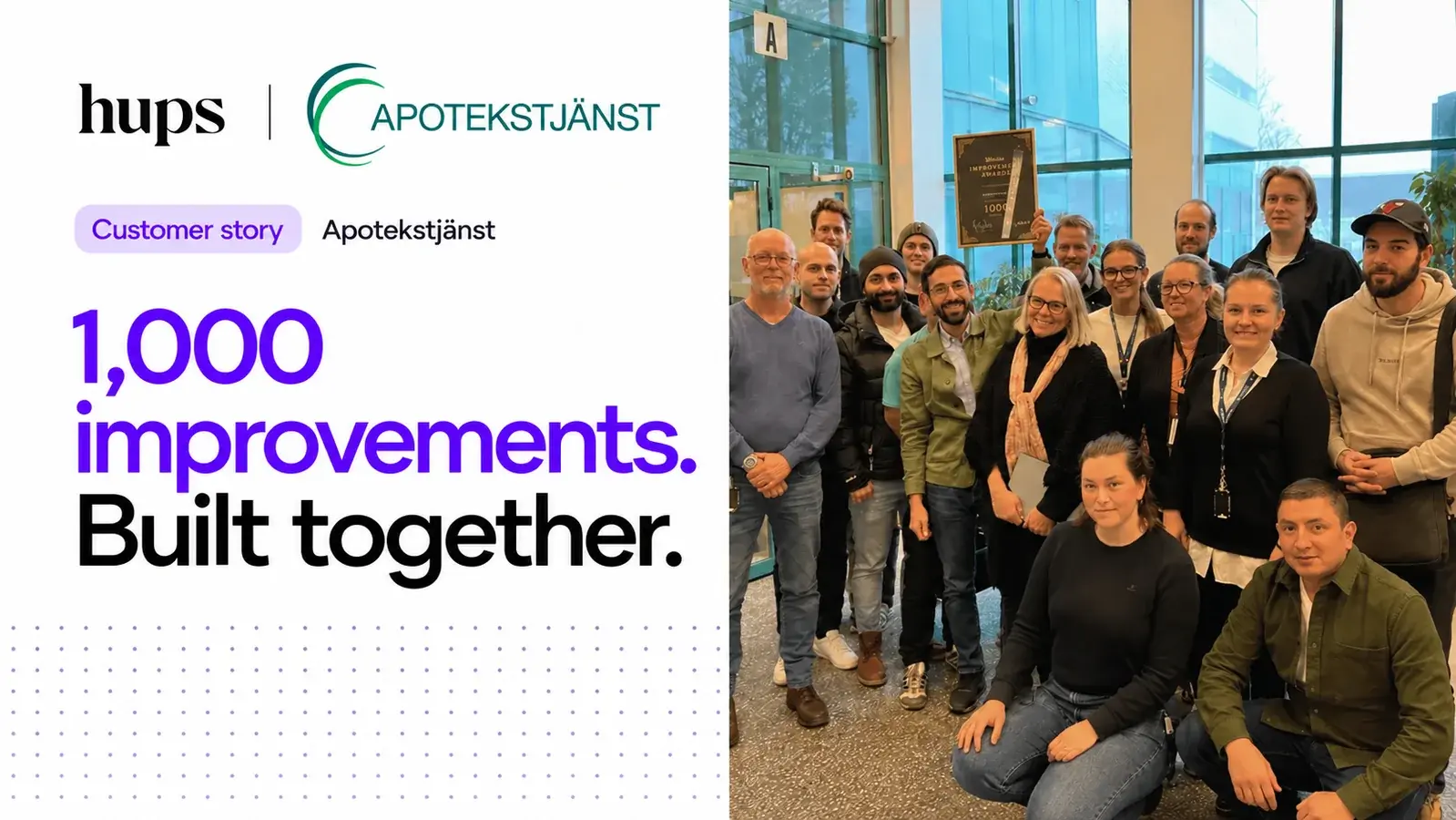
1,000 improvements
Apotekstjänst
Apotekstjänst: celebrating 1,000 improvements
Apotekstjänst passed 1,000 improvements, each one found and carried out by people inside the organization.
Read the story →FAQ
Questions about managing and improving end-to-end flows
Can't find what you're looking for? Talk to one of our experts.
Do you analyze our flows for us?
No. We build your capability to continuously manage and improve your flows yourselves. A cross-functional flow team takes responsibility for the entire flow, supported by training, analysis and coaching.
Which flows can this be applied to?
Both primary flows that deliver products and services to customers, and secondary flows that enable them, such as logistics, procurement, design, maintenance, recruitment or training. You can start with one critical flow or scale across many.
How is the program structured?
In four integrated phases: mobilize the flow team, diagnose and analyze the flow, establish flow governance, and improve and stabilize the flow.
What does flow governance involve?
A cross-functional management structure built on four capabilities: performance management, flow management, resource management and improvement management.
How quickly can we see results?
Depending on scope and ambition, significant improvements can be achieved in a short time, with results that last.
Related services
Keep building flow capability
Flow Identification & Flow Analysis
Shift from process thinking to flow thinking by identifying, mapping and improving the flows that create value.
Learn more → TransformationImplementing Daily Management
Make daily management a core capability that systematically improves productivity, performance and engagement.
Learn more → TransformationDeveloping Continuous Improvement
Build a self-improving organization where continuous improvement is part of everyday work.
Learn more → TransformationCompany-Wide Transformation
Management-led transformation where capability, ownership and execution are built into the organization itself.
Learn more →Building flow as a competitive advantage
Ready to turn silos into high-performing flows?
Talk to us about how managing and improving end-to-end flows can help you build a lasting flow mindset and a practical operating model that strengthens competitiveness, customer value and long-term performance.
