

When handovers are unclear, incomplete, or open to interpretation, work slows down and frustration builds up. This article is based on a real-world case from operations and follows one team as they try to understand why their work never seems to flow, despite experience, effort, and repeated discussions.
When the friction can no longer be ignored. When every task that comes in must be corrected or double-checked. When doubt creeps in about whether it will ever be possible to make things work, to reach a day-to-day reality where things “just flow.”
John was responsible for planning logging operations for private landowners, forest areas purchased to supply sawmills or paper mills. But for almost every area he planned, questions, corrections, or outright errors had been cropping up for a long time.
In recurring discussions and meetings, he and his colleagues talked about the challenges, highlighted concrete improvement ideas, and sometimes saw short-lived peaks in better results, but never anything long-term or sustainable.
One standard, seven different interpretations
To satisfy his curiosity about how well his colleagues understood the requirements for a correct handover, he asked the same question to seven different coworkers. He was taken by surprise when he received seven different answers.
Frustrated, he searched for the previously agreed standard for how the work in the preceding step should be completed. It was carefully stored in the management system, correctly named according to the company’s nomenclature, and revision-controlled using the right template - but never used.
He saw that the standard had last been updated four years earlier. The most recent download had taken place the day after that update. After that, nothing.

The situation created both resignation and disappointment. At the same time, he still had energy left and decided to try a new approach. If dialogue and discussion had not worked, or as he could admit to himself, if he had mostly just complained about his colleagues at times, then he needed to do something different.
He printed the standard. Simply put, it consisted of 26 items in a checklist. Then he got to work.
The “tracking challenge” begins
Over the following month, he noted, item by item, at every handover whether the information was complete enough for him to continue working without asking for clarifications or redoing the work. The question he asked himself was simple: was the handover into his part of the flow complete and correct?
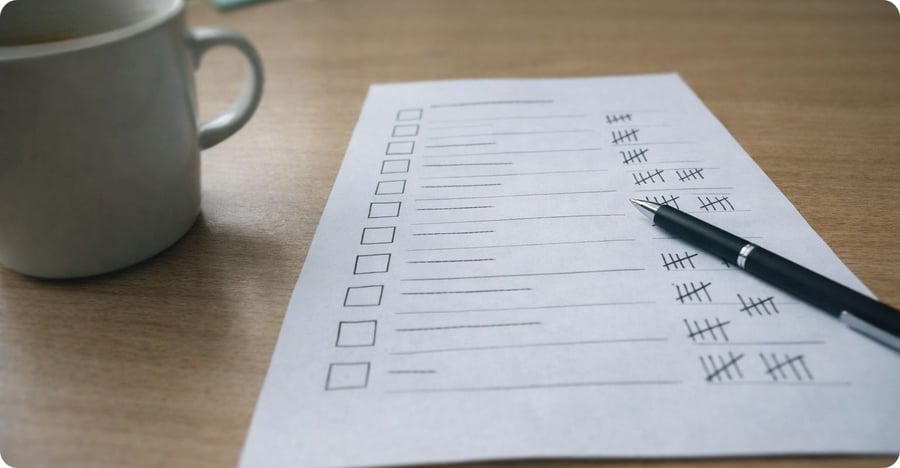
After a month of diligent notetaking, in what he himself called a “tracking challenge”, more formally a frequency study, a pattern began to emerge. Some errors occurred often, some things were almost always right, and in between there was wide variation with mixed mistakes.
It also became clear which colleagues maintained the highest level. To John’s great surprise, there were only two people who consistently performed better than the rest. There was also something slightly amusing about it: the one who had been with the company the longest and the one who was brand new.
Now he faced the next question: what should he do with this information?
The conclusion: Start where it feels safest
John had no formal background in change management and, as he put it himself, conflicts with colleagues were not in his interest. He was afraid of being questioned and of his colleagues feeling that he had been monitoring them in silence.
In a conversation with his partner, who had experience with successful change initiatives in healthcare and knew some of his colleagues, they decided that he should start by talking to the most senior colleague. It felt like a reasonable and safe place to begin, since that colleague more often than others managed to deliver complete and correct handovers.
One evening, John sat down and reviewed the most recent cases he had planned. He chose one where the senior colleague had made an obvious mistake. The idea was to use it as an entry point for the conversation and then talk about the tracking challenge, in which the senior colleague had actually performed best, with the fewest marks. John hoped this would make the conversation easier.
Was his concern justified, or was he overthinking it?
The conversation
Later that same week, John knocked on the senior colleague’s door and went straight to the deviation that had occurred in the most recent handover. To his great surprise, the colleague thanked him and apologized for the mistake. What could have become a difficult situation quickly turned into an open and unpretentious conversation about why the error might have happened. The colleague even joked about what John could do if it happened again.
John felt the momentum was on his side and asked if he could show more examples of recurring errors. He invited the colleague to his office.
It did not take long before the senior colleague sat down in the visitor’s chair next to John, covered his mouth with his hand, and said, “I’m sorry. I had no idea it was this bad. Is it like this for you every day, with every handover? This isn’t good enough.”
What had first seemed like a potential threat quickly turned into an energizing conversation about what they could do about the situation.

John described his concern about raising the issue in the group, the risk of being perceived as controlling or uncomfortable. The senior colleague looked at him and said, “I promise we’ll present this together. I’ll start by showing all the mistakes I’ve made myself.”
In his role as the most senior employee, he could more easily earn the group’s trust and help John invite everyone into a dialogue about the next steps.
Results begin to appear and routines establish
Eight weeks later, when John walked into the office, he was greeted by Linnea. At the start of the improvement effort, she had been one of the lowest performers, but now she proudly wanted to show an improvement she had made to meet item twelve on the checklist, the one she had never managed before.
John was very pleased. He knew this was one of the last obstacles on the path toward the shared goal they had set in the meeting with the senior colleague.
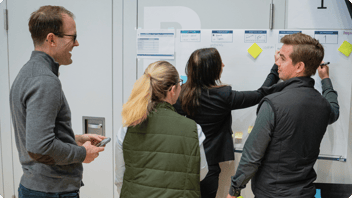
Time had gone by quickly. The first two months were slow, but after that, things gradually turned around. A decisive moment came when the tracking challenge was moved out into the hallway so everyone could see it. The suggestion came, surprisingly enough, from the youngest colleague in the group, Robin.
“I want feedback as quickly as possible,” he said. “And if you’re not in the office, John, I want the result of the latest handover to be posted out there.”
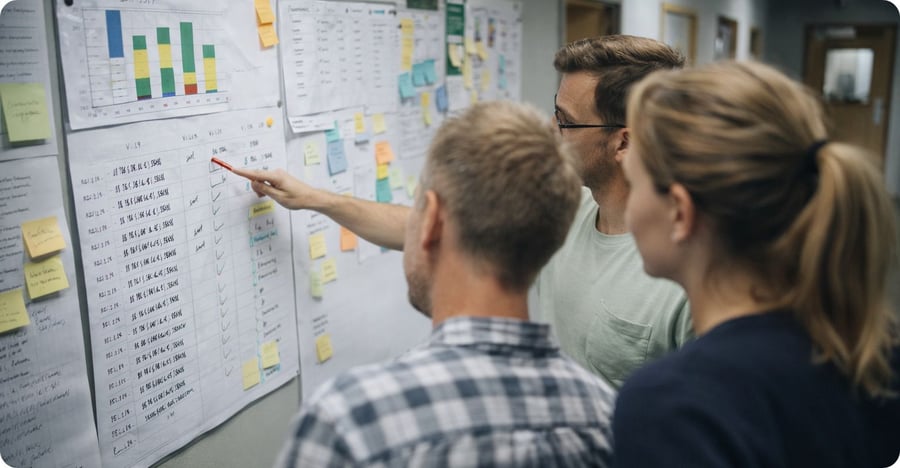
Another important improvement was initiated by the senior colleague. After a few weeks, once he had truly stepped into his informal leadership role, he suggested that the group meet weekly to align on upcoming work. Not afterward, but in advance, to remind each other of key improvements and activities needed to make the next week’s handovers successful.
Now they were looking both backward and forward. Everyone received fast feedback on whether things were improving. John saved so much time that he could also support his colleagues in several preparatory steps, since he rarely needed to correct anything anymore.
Everyone benefited from the shared initiative to improve the handover between functions.
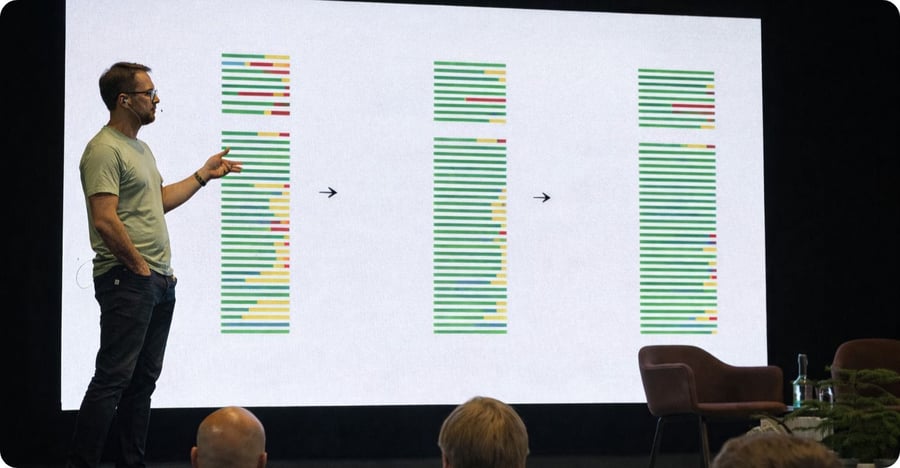
Later that fall, the team was recognized for their simple but powerful improvement work and was selected to present it to the rest of the organization. A small gesture in itself, but very important for the group’s overall improvement efforts, a clear example of systematic and inclusive improvement work with a shared goal.
How the improvement was approached, a simple way of working
What John and the team did can be described as a simple but consistent way of improving handover quality. No new systems were introduced, and no major projects were launched. The focus was entirely on how the work was carried out day to day.
The approach can be summarized in four steps:
1. Define what “done” means
A standard existed with 26 clear requirements that always had to be met for a handover to be considered complete and correct. This removed room for interpretation and replaced individual assumptions with a shared reference.
2. Measure the current state in a simple way
Through a frequency study, the tracking challenge, every handover was followed up item by item. Not to single out individuals, but to understand patterns and variation in the way work was done.
3. Make results visible immediately
The results were moved from John’s desk into the hallway. Everyone could see how things were going, unfiltered and without delay. Feedback became fast, concrete, and shared. John helped his colleagues understand whether they were moving in the right direction.
4. Learn together, before the work happens
The weekly conversations were not about what had gone wrong, but about what needed to work in the coming week. The focus shifted from reactive correction to proactive coordination.
This created a shared rhythm where improvement became a natural part of the work, not something added on top of it.
Why did this approach produce such clear results?
The results did not happen by chance. They emerged as a consequence of a few fundamental principles that are often underestimated in improvement work.
Time to feedback - First, the team received fast feedback from reality. Every handover immediately showed whether the way of working was effective or not. This dramatically shortened the learning cycle.
Focus on the way of working, not the person - Second, the focus shifted from individuals to systems and ways of working. The question was not who made a mistake, but why it was hard to do the right thing. This lowered defensiveness, increased openness, and freed up engagement.
Shared ownership - Third, shared ownership was created. When results were visible to everyone and improvements were discussed together, handover quality became a responsibility for the whole, not for individual roles.
Focus on the desired state, how do we want it to work? - Finally, the perspective was moved forward in the flow. By talking about upcoming work before it was done, the need for corrections, stress, and rework decreased.
Together, this created better quality, higher pace, and less frustration, without working harder.
Want to learn more?
Where in your organization does friction arise in handovers today, and how clearly is it defined what is complete and correct before work is passed on?
If you want to go deeper into how this works in practice, we are hosting a webinar on the topic.
Webinar: Handover Quality – The Foundation for Flow Efficiency
Joacim Harrby walks through a step-by-step approach to improving internal cross-functional flow, with a clear focus on handover quality. You will:
• See a real improvement case from one of Hups’ customers
• Understand the problem, the solution, and the results
• Learn the theory behind flow efficiency in a way you can apply directly with your own team
This session is for leaders and practitioners who want continuous improvement to work across teams, not just within them.
March 5
Swedish session (13:00–14:00)
English session (15:00–16:00)